


What’s in Your Water? Hidden Shower Contaminants & Why Filtration Matters
Most of us think about filtering the water we drink, but far fewer consider the water we shower every single day. From chlorine and heavy metals to sediment and other contaminants, shower water can impact your skin, hair, and overall wellness through daily exposure, steam inhalation, and direct contact with the body.
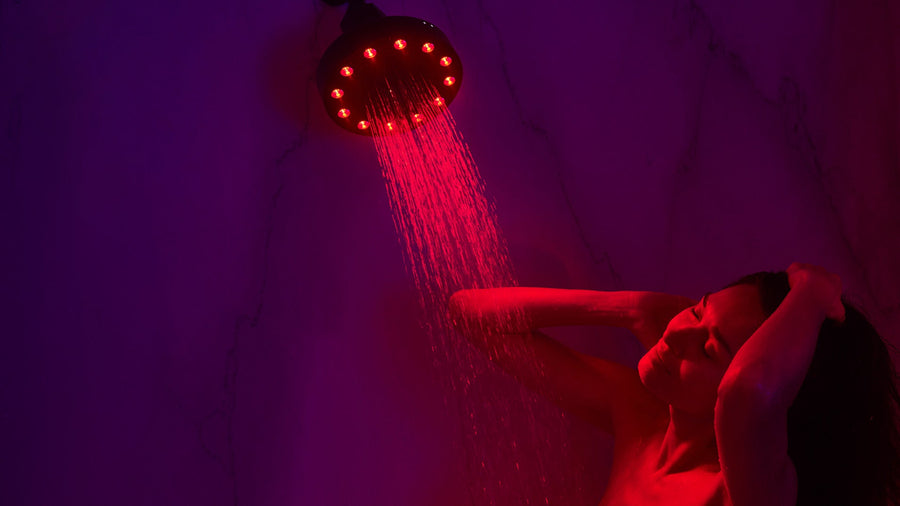
As we launched the HigherDOSE Red Light Showerhead, we wanted to take a closer look at what’s actually coming out of the tap. That’s why our shower head combines red light therapy with a 10-step water filtration system, designed to reduce common impurities while turning an everyday shower into a more restorative wellness ritual.
To bring an expert perspective to this conversation, we spoke with Jay Devram, co-founder of Lightwork Home Health, the leading provider of home health assessments. They comprehensively test homes across the world for environmental toxin exposures and then help resolve the issues they find. Their assessments include advanced water quality testing, as well as analysis of air, lighting, EMF exposure, and mold.
For readers who are new to your work, how did you get into the field, and what does Lightwork do?
It started from personal experience. My co-founders and I each separately experienced unexplained health issues that we ultimately discovered were being caused by our home environments. We realized that environmental toxins in the home can have such a significant impact on health, yet they're commonly overlooked. The air you breathe, the water you drink and shower in, electromagnetic fields, lighting, and hidden mold can contribute to everything from minor issues to serious health problems. You spend more time in your home than anywhere else. It should be supporting your health, not undermining it. That's what led us to start Lightwork.
Today, we test homes for everything that could be affecting health, then help fix what we find. Every home has something, either a serious issue that needs addressing immediately, or optimizations that improve sleep, focus, and how you feel day to day.

Why is filtering your shower water so important, and how is exposure different from drinking water?
The water you shower in is a significant source of contaminant exposure that often gets overlooked. People focus on their drinking water, which is important, but for certain contaminants, shower water exposure can actually be more significant.
The key difference is how contaminants enter your body. With drinking water, ingestion is the primary route. With shower water, the main concerns are inhalation and dermal absorption. Hot water vaporizes certain contaminants, so you're breathing them in. And because your skin is permeable to many of these compounds, they can be absorbed directly. In some cases, like highly-volatile organic compounds, you may actually consume more of them from showering than from the water you drink!
What are some of the concerning contaminants found in shower water, and where do they come from?
Some of the more concerning contaminants we find in shower water are chlorine-based disinfectants and disinfection byproducts:
-
Chlorine-based disinfectants: These compounds are added during water treatment to kill bacteria and pathogens, which is important. But they don't fully get removed before reaching your tap. During hot showers, chlorine can enter the body through inhalation of vaporized chlorine gas and absorption through the skin.
-
Disinfection byproducts: When the chlorine-based disinfectants react with organic matter, they form compounds called disinfection byproducts, which are volatile organic compounds. These include trihalomethanes and chloroform, which are particularly concerning.
These compounds are present at surprising levels in our municipal water. In the homes we've tested across the U.S. over the past two years, unfiltered shower water contained total trihalomethanes, a set of common disinfection byproducts, at an average of 93 times higher than commonly used health guidance levels.

How can unfiltered shower water affect skin, hair, and the body over time?
The effects people notice first are usually on their skin and hair. Chlorine strips natural protective oils, leading to dryness, irritation, and gradual damage. People with eczema, psoriasis, or sensitive skin often see symptoms worsen. Hair can become brittle and lose color faster.
The longer-term concerns are more serious. Certain disinfection byproducts have been linked to elevated cancer risk and damage to the liver, kidneys, and central nervous system.
Who benefits most from filtering their shower water and how can someone tell if they need it?
Based on what we've seen, most people would benefit. Most homes have tap water with contaminants that can pose issues in the shower. That said, it's especially relevant for sensitive groups such as young children, pregnant women, anyone with skin sensitivities, and people navigating chronic health issues.
If you want to know what's in your water, the EWG (Environmental Working Group) has a free database at ewg.org/tapwater where you can search your zip code and see what's been detected in your local supply.
How does improving shower water quality fit into a broader wellness or recovery routine?
There are so many sources of exposure to environmental toxins in modern homes, and nobody's home is perfect. Some issues we find are much harder to address, but shower water is one you can control. You're exposed to it every day, and filtering it is a high-leverage, one-time change that keeps you protected. Cumulative exposure is what matters, so every reduction helps.
Jay Devram is a co-founder of Lightwork Home Health and a seasoned expert in environmental health and home wellness. Before joining Lightwork, Jay founded Universe Health, a leader in residential environmental testing focused on uncovering hidden toxins and exposures that impact daily wellbeing. At Lightwork, he helps build and scale comprehensive, data-driven home health assessments that analyze air quality, water contaminants, EMFs, lighting, mold, and other environmental stressors that often go undetected in modern living spaces. His work bridges scientific rigor with practical solutions, empowering homeowners to reduce daily exposure to pollutants and create environments that genuinely support health and resilience.
