







Blue Light Before Bed: Why Your Screen Is Sabotaging Your Recovery
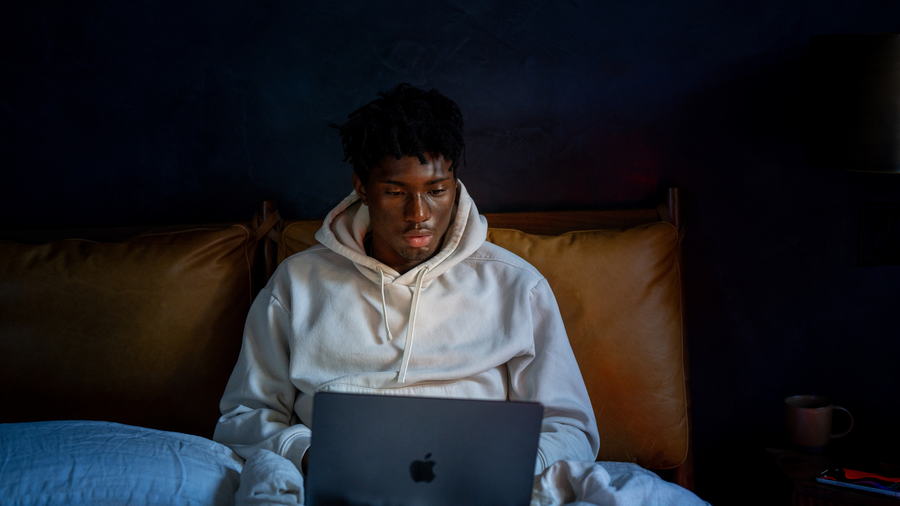
If you’ve fallen victim to not feeling refreshed after a full night’s sleep, your phone might be more responsible than you think. Blue light before bed doesn’t just make it harder to fall asleep — it changes the quality of the rest you actually get. How you spend the final hours before bed doesn’t just define your sleep, it defines your recovery for the next day.
Look, we know doomscrolling isn’t great for us. Nobody needs another article telling you to put the phone down at 9pm — you’ve heard it, you know it, and most of us are doing it anyway. But there’s a second layer to this problem that has nothing to do with willpower: the light itself.
Key Takeaways
-
Blue light before bed delays melatonin, pushing back the point at which your body is actually ready to sleep and cutting into deep sleep.
-
The 415–455 nm blue range is also linked to eye fatigue and oxidative stress in skin cells.
-
Red light in the 620–700 nm range is the wavelength studied in photobiomodulation research for cellular energy, recovery and sleep signaling.
-
BodyGuardz Red Light Converter is a screen protector that converts your screen’s existing blue light into red light. No filter, no color shift, no new step in your routine.
-
You don’t have to quit screens to protect your recovery. Change the light, not the habit.

How Does Blue Light Before Bed Affect Sleep?
Blue light before bed delays melatonin production, which pushes back the time your body is actually ready to sleep. The result is a later sleep onset, less time in deep sleep, and a groggier morning — even if you spent a full eight hours in bed.
Blue Light and Melatonin: What’s Actually Happening
Blue light from your devices tells your brain it’s still daytime. Your body responds by delaying melatonin production, the hormone that helps ease you into sleep. So when you’re ready to put your phone down and go to sleep, your body hasn’t gotten the memo. You’re asking it to rest while it thinks the sun is still out.
The result? You fall asleep later than you think, you cycle through less deep sleep, and you wake up groggy.
How Much Screen Time Are We Actually Talking About?
It’s not a small problem, either. The average person — Gen Z especially — spends 6+ hours a day on their phone, often just inches from their face, according to eMarketer. That’s hours of repeated, close-range exposure every single day, and research continues to show it adds up: it affects eye comfort and eye strain from screens, sleep quality, and even oxidative stress to the skin.
Does Blue Light Damage Your Skin?
Short answer: the research points to yes — not through burning or tanning, but through oxidative stress. Blue light in the 415–455 nm range has been linked in existing research to eye fatigue, disrupted sleep signalling, and oxidative stress that can break down collagen. A 2018 NIH-published study found that just one hour of blue light exposure increased oxidative stress markers in skin cells, and a 2023 study in the Journal of Cosmetic Dermatology found that blue light activated MMP enzymes associated with collagen breakdown.
Red Light Before Bed: Why the Opposite Wavelength Helps
Red light before bed sits at the opposite end of the visible spectrum from blue — and it doesn’t carry the same “it’s still daytime” signal. That’s the logic behind swapping blue for red at night rather than eliminating light altogether: the problem was never the screen, it was the wavelength.
What Photobiomodulation Research Shows
Red light in the 620–700 nm range, by contrast, is the same range studied in clinical photobiomodulation research, which has consistently shown it may support mitochondrial (cellular energy) function, help reduce inflammation, and support skin recovery and healthy sleep signaling.
Rather than adding a new light source to the equation, Red Light Converter moves your screen’s existing output further into that second, more beneficial range — and further away from the first. It’s the same wavelength logic behind red light therapy devices, applied to a surface you’re already looking at.

Why BodyGuardz Built a Fix Instead of Asking You to Unplug
BodyGuardz has spent over two decades protecting the devices people can’t put down. When the research on blue light kept mounting, the team didn’t want to add another rule to everyone’s nighttime routine. They wanted to solve the problem at its source.
Realistically, people aren’t giving up their phones before bed, no matter how many wellness articles tell them to. So BodyGuardz built something that works with that reality instead of against it — a way to make the time you’re already spending on your phone less disruptive to your biology, without asking you to change a single habit.
That’s the idea behind Red Light Converter: technology built into the same screen protector that’s already protecting your phone, designed to make your existing screen time gentler on your sleep, your eyes, and your skin.
How Red Light Converter Works: Quantum Dots, Explained
Red Light Converter uses a layer of quantum dots — tiny semiconductor nanoparticles — to absorb the high-energy blue light leaving your screen and re-emit it as red light, without blocking, dimming or tinting the display.
Filter vs. Device vs. Conversion: What’s the Difference?
Most blue light solutions fall into one of two categories:
-
A traditional blue light filter blocks light, dimming or yellowing your screen.
-
A red light device generates its own light — an extra step you have to add to your routine.
Red Light Converter does neither. It converts the light that’s already coming from your phone. Nothing gets blocked, and there’s no new step to remember.

Built into the screen protector is a layer of quantum dots — tiny, specialized semiconductor nanoparticles. When your phone’s screen emits blue light, that light physically passes through this layer. The quantum dots absorb the high-energy blue light and re-emit it as red light, in the wavelength range associated with beneficial light therapy.
Does Night Shift Do the Same Thing?
No — and the difference matters. Night Shift and other native software settings work by tinting your entire display red or orange. Quantum dots work on the light itself after it leaves the screen, so your display’s original colors, brightness, and clarity stay exactly the same — no visual distortion, no orange-tinted photos or texts. Same phone, same apps, same color accuracy; the light just reaches your eyes and skin differently.
The Third-Party Testing Behind Red Light Converter
Independent, third-party testing backs up the core claim. TÜV Rheinland, a global testing, inspection, and certification specialist, and Optronic Laboratories, a leader in LED and lighting measurement, both evaluated the product. In their assessment of the iPhone 15 Pro and 15 Pro Max, Optronic Laboratories conducted spectral transmittance and radiance measurements with and without Red Light Converter installed. Their conclusion: "The results indicate that the screen protector effectively reduces harmful blue light while enhancing beneficial red light in the visible spectrum, as claimed by BodyGuardz."
Beyond the lab, BodyGuardz has also been tracking real-world results. In a customer survey, heavy device users reported 85% less eye strain and 77% better sleep after switching. The brand is also running a formalized research study using the Oura ring to track HRV, sleep quality, and stress load with consistent screen use. The study is still in progress, but one participant, Lindsay Richman, founder of Vibrissa AI, saw improvements in her own HRV and sleep metrics after switching.
To be clear about where the science does and doesn’t stretch: Red Light Converter is designed to help convert blue light into red light and to support eye comfort, better rest, skin health, and overall well-being. It’s not intended to treat skin conditions, replace your skincare routine, or replace a dedicated red light therapy device.
You Don’t Have to Go Screen-Free to Sleep Better
Cutting out screens entirely before bed sounds great in theory. In practice, most of us aren’t giving up our nightly scroll, favorite show, or lively group chats — and that’s okay. Progress doesn’t require perfection. Alongside cutting back where you can, it helps to make the screen time you do have a little less costly to your body — and a little kinder to your sleep architecture.
That’s what Red Light Converter is built for: converting the light coming from your screen so it stops signaling "daytime" to your brain, and starts working with your body’s natural wind-down instead of against it. Same screen time, less sabotage.
How to Build a Wind-Down Ritual That Actually Sticks
Red Light Converter takes care of the light, but screen time is only one piece of the puzzle. If you’re looking for more ways to optimize your sleep and feel rested when you wake up, we’ve curated some of our favorites.
Dim the overhead lights. It’s not just your phone — any bright light in the hours before bed can suppress melatonin production. Swap the overheads for a lamp or candles to help signal to your body that it is actually nighttime.
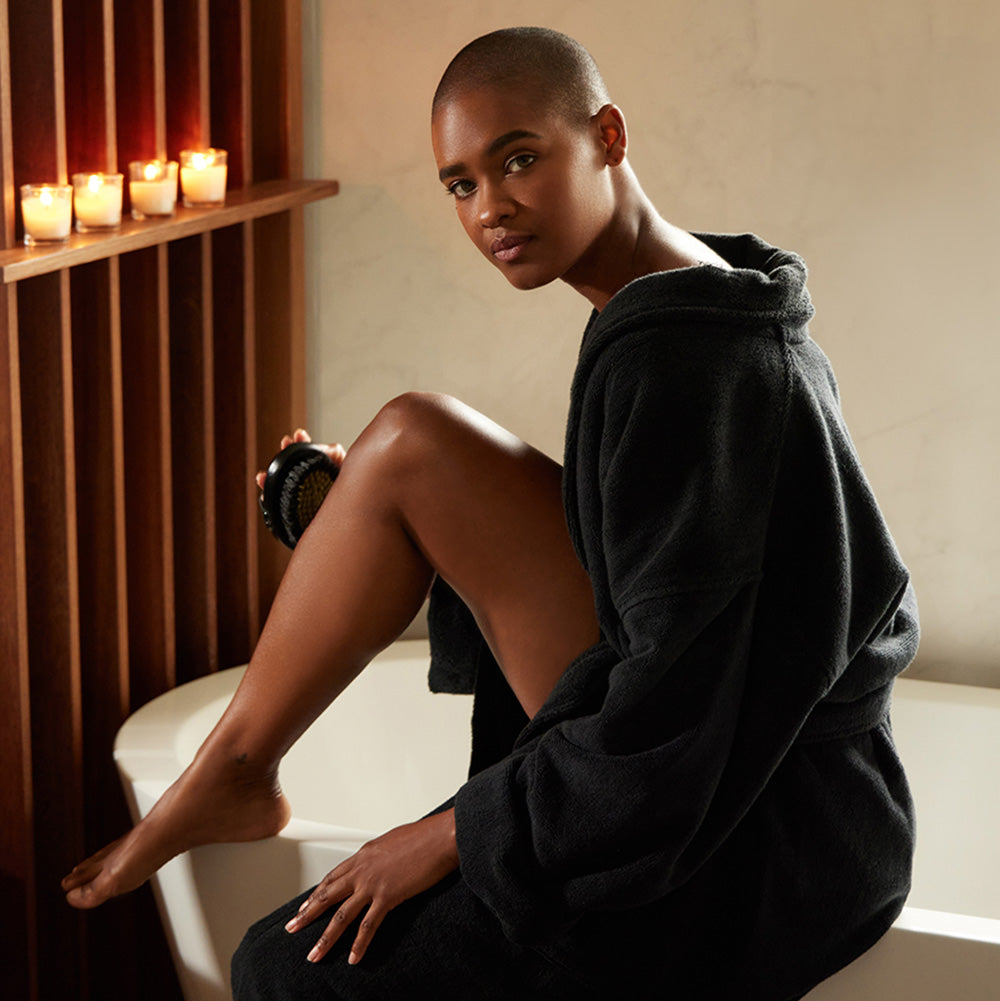
Soak the day off. There’s something about a bath that offers the perfect reset. Add magnesium salts, like our Serotonin Soak, to help calm your nervous system and ease into sleep. Bonus: turn on the Red Light Showerhead Filter while you bathe to support circadian rhythms and amplify your wind-down vibes.
Indulge in relaxation. Whether it’s stretching, journaling, or a skincare routine you enjoy — a Red Light Face Mask session counts — anything that helps get you out of your head and relaxes you.
Craft a sleepy mocktail. Think chamomile, tart cherry, or a magnesium-based sleepy mix to signal to your body that it is time to shift gears.
Spread out on our PEMF Pro Mat. Gentle electromagnetic pulses help ground your body and ease it into rest and recovery before you turn in for the night.
Better sleep starts with better habits. Find the rituals that actually stick, and the recovery will follow. If you’d rather not assemble the whole wind-down piece by piece, our Beauty Sleep Ritual bundles the ones we reach for most.

Blue Light and Sleep FAQs
Does blue light before bed really affect sleep?
Yes — mainly through melatonin timing. Blue light signals “daytime” to your brain, which delays melatonin release and pushes back the point at which your body is actually ready to sleep. The effect is strongest with close-range exposure, like a phone held inches from your face.
How long before bed should you stop looking at screens?
Most sleep research points to 30 to 60 minutes of screen-free time before bed. Realistically, most people don’t manage that. Reducing the amount of blue light reaching your eyes and skin matters more than hitting a perfect cut-off time you won’t keep.
Does Night Shift or dark mode help you sleep?
Only partly. Night Shift and dark mode tint your display warmer or dimmer, which reduces the intensity of what you see — but they visibly distort colour, and they don’t change the wavelength of the light your screen actually emits.
Does blue light damage your skin?
Research points to oxidative stress rather than burning. A 2018 NIH-published study found one hour of blue light exposure raised oxidative stress markers in skin cells, and a 2023 Journal of Cosmetic Dermatology study found blue light activated MMP enzymes associated with collagen breakdown.
Is red light better than blue light before bed?
For evening use, yes. Red light in the 620–700 nm range doesn’t carry the same melatonin-suppressing signal as blue light, and it’s the range studied in photobiomodulation research for cellular energy, inflammation and recovery.
Do blue light glasses help with sleep?
Blue light glasses block a portion of blue light before it reaches your eyes, which can help. They do nothing for the light reaching your skin, and they only work while you’re actually wearing them — which, in bed, most people aren’t.
Sources: eMarketer; Optronic Laboratories spectral testing (iPhone 15 Pro/15 Pro Max); TÜV Rheinland third-party testing; National Institutes of Health (2018 study on blue light and oxidative stress); Journal of Cosmetic Dermatology (2023); clinical photobiomodulation research; BodyGuardz customer survey and reviews; Oura ring biometric tracking (formal research study in development).
Unwind and Sleep Deeper

Full Body Red Light Mat

Infrared PEMF Pro Mat
