






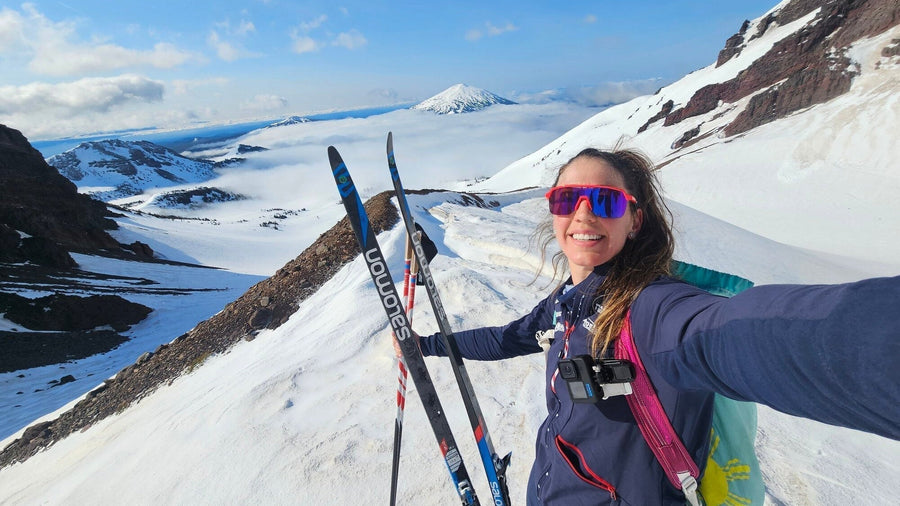
Recovery, Rituals & Resilience: Deedra Irwin on the Road to the Olympics
When you think of the Olympics, you picture the podium: the flag, the anthem, the moment. What you don’t see is the years of disciplined training, the invisible recovery work, and the nervous system mastery required to perform under the highest pressure imaginable.
For Deedra Irwin, representing Team USA means balancing endurance and precision, grit and stillness, pushing her body to its limits while cultivating the kind of inner calm that allows her to shoot with steadiness after an all-out sprint. In this conversation, Deedra shares what the road to the Olympics really looks like, the recovery rituals that sustain her, and the habits that help her stay calm, focused, and connected to herself beyond sport.
The Road to the Olympics
For those who may not understand the full scope, what does the road to the Olympics actually look like day-to-day?
In a sport that requires so much training, the road to the Olympics is a full-time job for a biathlete. I train about 600-650 physical hours a year and then on top of that, mental and shooting training. Day-to-day can be put as simply as eat-train-rest-sleep on repeat! However, there is so much more that goes into it. You have to also be committed to adding in stretching, physical therapy, good food, proper recovery and hobbies to make you feel normal. And since most of us athletes aren’t actually making enough money to survive you have whatever your income might be. Contacting sponsors, speaking engagements, posting on social media, etc. It requires a lot of structure to make sure you’re getting the most out of every hour of the day so that you can feel productive, rest properly and get right back at it again. Making a good training plan is just the beginning.
What does a typical training week include in your sport?
In biathlon you have the endurance component of skate skiing and the precision focus of rifle marksmanship. Then combining those you need to have the skill to be able to switch back and forth. So there are a lot of different ways I like to train in a week. A typical training week in the summer is about 20hrs of movement. Monday is usually a rollerski workout in the morning (2 hours) and then a run or bike in the afternoon (1.5 hours). Tuesday morning is rollerski intervals with shooting (2 hours) and strength in the afternoon (1.5 hours). Wednesday is a long endurance day hiking, biking, skiing, or whatever else I’m feeling up to (4 hours). Thursday is maybe working on ski technique in the morning (2 hours) and then a light run in the afternoon (1 hour). Friday is another interval day, usually rollerskiing and shooting (2 hours) and strength in the afternoon (1.5 hours). Saturday is another long endurance day (3 hours). I've gotten really into gravel road biking. Then Sunday is a rest day!!! Along with this physical endurance schedule, I usually go to physical therapy twice a week and try to do a focused shooting session twice a week.
How do you define balance when training for something as massive as the Olympics?
I would say that making sure that your training and your sport aren’t solely what defines you as a person can bring balance to training to become an Olympian. There is so much more to me than being an Olympic Biathlete. Finding something that grounds you outside of your day-to-day training is so important. I find balance in my hobbies and goals outside of training and competing. My husband is also an Olympian and we have had to work really hard to make sure that we are balancing our lives inside and outside of sport. So we find joy in perfecting our baking, giving back to our communities, inspiring young athletes and planning our next life project.

Training vs Recovery: The Other Half of Performance
Do you prioritize recovery the same way you prioritize training?
I definitely try to! It’s funny how easy it is to train most days and how hard it is to make sure you’re recovering properly. Whether it’s stretching or doing PT exercises, I find it hard to muster up the mental and physical energy most days to do the extra recovery work outside of training. So I’ve tried to work it into my schedule more and get tools that make doing and enjoying the recovery more. Such as the PEMF mat! I can turn it on when I get home and lay on it and stretch while I have my recovery shake and watch Netflix! And I know I’m getting better recovery because of it.
How much of your performance would you say is determined by recovery?
Day-to-day my performance in training is 100% determined by my recovery. When I’m not recovering properly, my training gets harder and harder and stops feeling productive. During the racing season, not recovering properly after a week of racing can lead to sickness and decreased performance. As I’ve gotten further along in my athletic career, recovery has become more and more of the priority for better performances.
What does your recovery protocol look like during heavy training blocks?
During heavy training blocks I’m usually at the Olympic training center which makes access to recovery a lot easier to manage. At the training center I am able to get massages and physical therapy multiple times a week. There is also a cold tub that feels amazing after long intervals in the heat. I like to utilize compression boots and massage guns for post training recovery. During the heavy training blocks I try to make sure I’m spending 30-45 min after every hard session using the recovery tools I have and also prioritizing my nutrition.
What role does sleep play in your performance?
Sleep plays an incredible role in performance and recovery. I track my total sleep, resting heart rate and heart rate variability daily to help me understand how I’m recovering from the previous day's training and stress. Your body and mind rebuilds itself when you’re sleeping. So it’s not just about getting enough sleep, it’s equally as important to make sure you’re getting good sleep.
What signs tell you your nervous system needs more support?
For me I can tell when I’m getting burnt out because good sleep gets more difficult. When I’m pushing my body too much and not recovering properly I find that I have a harder time focusing and concentrating on simple tasks. I also start feeling more anxious or notice that my appetite is decreasing. Your body has ways of telling you that you need to slow down and I’ve noticed that the more I’ve learned to listen to my body, the better my training and recovery has been. It’s not easy to take time off most days because you feel that if you don’t work hard every day you’re falling behind your teammates or competition. But, a healthy body performs better!!!

The Female Body & Performance
How has your relationship with your body evolved as a female athlete?
I’ve learned over many years and many injuries that how my body looks doesn’t necessarily correlate to how it performs. I used to think I needed to be small or lean in order to be fast and win. But my muscles are what make it so I can move quickly. My body fat makes it so I can have energy and stay healthy. My relationship with my body has definitely gotten better and more respectful throughout the years because I’ve been able to see and feel what it can do when I stop worrying about how I look and really focus on just how I feel. Because I feel strong, capable and unstoppable when I just allow myself to be healthy.
Do you train differently around your cycle?
I try not to train too differently around my cycle because I know that there’s always a chance that I’ll have to race on a day that I get my period and feel gross. However, when I do have the flexibility to change a few workouts around if I’m having a particularly bad day I do. Especially during race season it can make a big difference for your racing to let your body rest if it’s not feeling 100%.
What conversations around female performance are still missing in elite sport?
So many!! I believe there is still so little research and science around female-specific training in endurance and elite sports. Should we train more around our cycles and hormone changes? What benefits are we missing out on because pretty much all the research around progressive overload training has been done on male athletes? Injury prevalence during different phases of our cycles. Women continue to compete while starting families and how that affects their bodies and performances. We need to have the conversations to try and normalize the fact that females perform, train, recover, and thrive differently in elite sport.

Rituals in Moments of Stress
Your sport requires calm precision under physical exertion. How do you transition from high-output movement into stillness and focus?
It takes a lot of discipline in training and the creation of good habits. The more I train good habits and consistent procedure during the summer, the easier the stillness and focus are able to be achieved in the winter racing. I’ll work on getting my breathing under control coming into the range which can help decrease my heart rate and increase the oxygen to my brain so that I have the calmness I need to pull the trigger at the perfect moment. I also have learned that I benefit from saying key phrases in my head or, as some people might call them, mantras as I enter the range and prepare to get into position. When I have a good race I often can’t remember everything that I thought and did during the race. It’s that “flow state” that all athletes crave to be in when you know you’re racing well. Everything outside of each moment melts away and you’re able to achieve that focus needed to perform well.
What rituals do you come back to when you’re overwhelmed or under pressure?
Throughout the day if I notice that I’m feeling overwhelmed and can’t seem to focus or get my mind under control I often try to nap or at least lay down and listen to music or visualize my race I’m preparing for. I’ve used naps for a long time to kind of coax my body out of its nervous state. I’ve also found now that knitting, doing puzzles or crosswords on my phone help me relax before competitions too. I wish I was better at meditation, but for now naps and puzzles work for me!
Are there daily non-negotiables that keep you grounded?
In a perfect world, I would say sitting down for coffee in the morning with my husband. I like having that time to connect and plan the day and enjoy a little bit of quiet time before I’m off to all the training sessions and PT and meetings.
How do you reset after a disappointing performance?
There are so many good quotes for this answer. “It’s not losing, it’s learning.” “Failure is a chance to grow.” I think about little quotes like that often when I don’t achieve the results I know I’m capable of. Finding a good part of each race I do and bringing that focus into the next one. With Biathlon being a two part sport, with skiing and shooting, it happens often where you will ski super well and miss targets or shoot super well and ski slow. It’s hard to have everything come together perfectly every time. So finding the small wins, acknowledging the shortcomings, and moving the focus to the next one is the best way to keep my head in the game all season.

Calming Nerves Before Big Olympic Events
What does the hour before competition feel like? Do you experience nerves and how do you work with them instead of against them?
Usually an hour before our event I’m already on the tracks warming up and zeroing my rifle. I think that making a good warm-up plan and keeping to my pre-race routines helps a lot with my nerves. I’ve been racing my whole life and I know how to get to the start line and perform. Believing in my skills and going through my routine can help me stay on task and avoid my nerves from taking over too much. But I think being nervous just means I care about what I’m doing and I want to perform well. So, I’ve learned to embrace them when they come and if they’re really working against me on a certain day I’ll lay down and get my breathing under control and I usually close my eyes and visualize myself skiing the course and shooting at the range. Visualization has helped me a ton throughout my career to make me feel prepared for those big moments.
Do you have a pre-race ritual?
I do in a way! Depending on what time of the day I’m racing it can change some, but usually I eat my last big meal about 3 hours before a race. About 2 hours before we head to the venue and I have some snacks or bicarb. 1 hour before the race I start my skiing warm up and I zero my rifle. During the skiing warm up I am checking out the course and snow conditions. On the range I am zeroing my sights in and checking out the wind conditions. 30 min before the race I’m adding in some faster warm-ups, usually race pace speeds, and taking my final carb gel. 15 min before my race I’m in the start pen doing my activation routine (lunges, skips, band walks, etc) and making sure my rifle and gear is ready to go. 5 minutes before I’m headed to the start line to get my transponders and skis. Then, next thing you know, the race begins!!

Ritual Outside of Sport
What keeps you connected to who you are outside of your sport?
My family and friends. They are always an amazing reminder to me for my life outside of sport. I look up to so many of them and what they do and who they are. I’m really surrounded by the best people in my life, because I know it never matters how I race, they will support me no matter what. My hobbies also help ground me outside of sport. I like knitting and baking and gardening, which makes me feel a little more normal in my life outside of everyday training.
What does rest look like when you’re not “recovering”?
Outside of sport recovery, rest for me looks like a beach vacation with delicious food and a cocktail in my hand. But in all reality, it’s taking a break from the world of sport with people I love. I spend a lot of my off season seeing friends and family and making sure to take time for myself to reset my body and mind for the long training season ahead.
If you could give one piece of advice to young female athletes, what would it be?
Seek help when you’re struggling physically or mentally. You’re not alone, being an athlete is hard and being a female athlete is sometimes harder. Listen to your body and respect recovery. And when you fail, because you will, learn and grow from that failure. Never give up on a bad day, have fun, love and enjoy the journey.
Shop An Olympian's Favorites

Infrared PEMF Pro Mat
Deedra grew up outside of Green Bay, Wisconsin in the Village of Pulaski. She was a competitive runner and didn't start nordic skiing until she was 16 years old to help her stay in shape for Track & Field. Deedra fell in love with skiing and decided to go to Michigan Technological University for all 3 sports - Cross Country, Nordic Skiing and Track. She also received a B.S. in Exercise Science with a Minor and Certification in Coaching. After college Deedra decided to chase the professional skiing dream and moved to Sun Valley, Idaho and raced for 2 seasons on the National Nordic Circuit. In 2017 at the age of 25, she got introduced to Biathlon, Nordic Skiing + Percision Shooting, and was hooked! 8 years later, Deedra is now a 2x Olympian for Team USA! In her debut race at the 2017 Olympics in Beijing, Deedra shot 19/20 and skied to a historic 7th place finish. This is still the best ever finish in US Olympic Biathlon history. Since the 2022 Olympics Deedra has been the top female athlete for the US Biathlon Team and in the 24/25 season was ranked top-40 in the IBU World Cup standings. She's currently ranked in the top-30 for this season with only 4 more races to go. Outside of biathlon and training, Deedra enjoys knitting, baking, puzzles, and playing piano.
