




Motherhood + The Making of a Brand with Lauren Berlingeri + Hope Smith
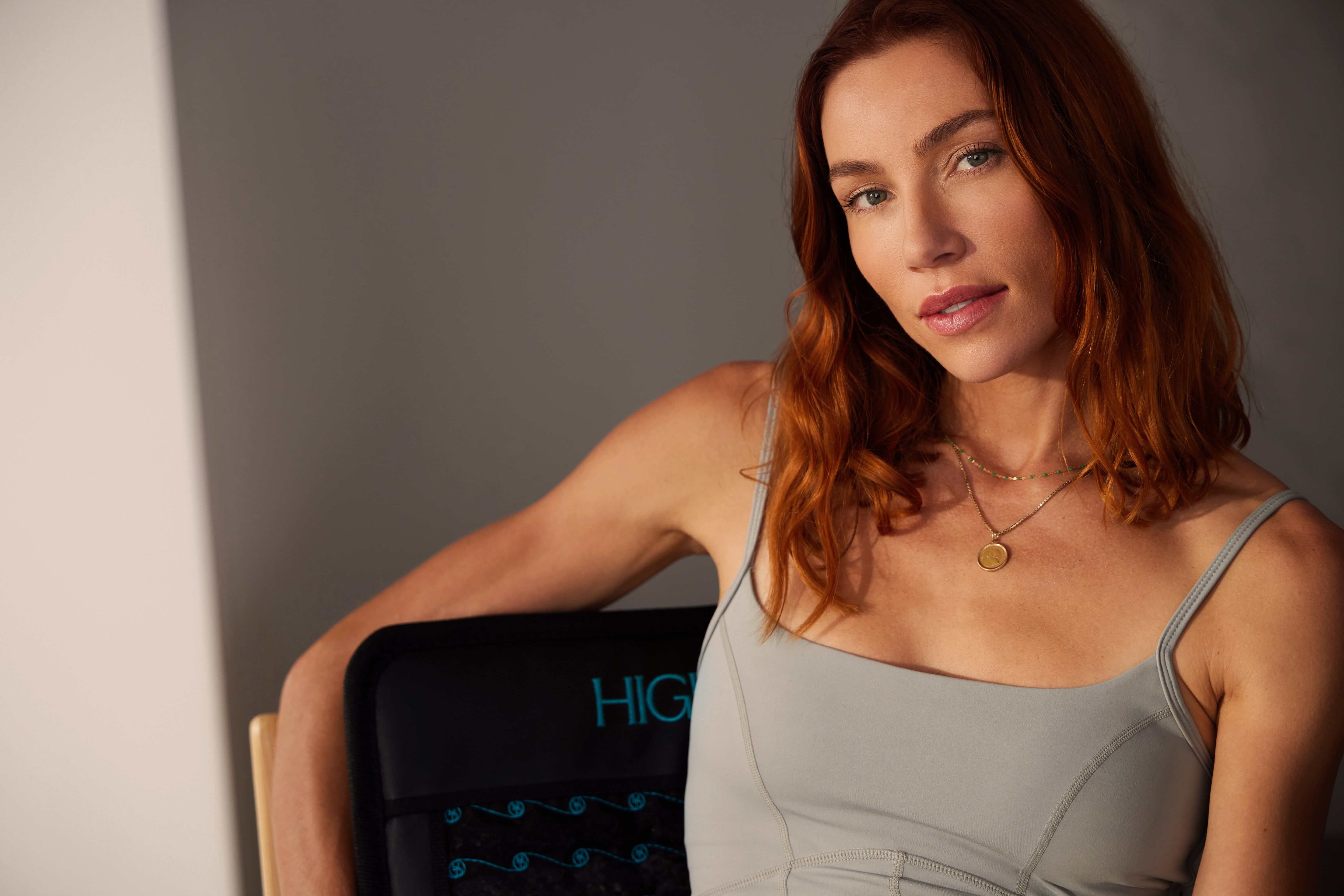
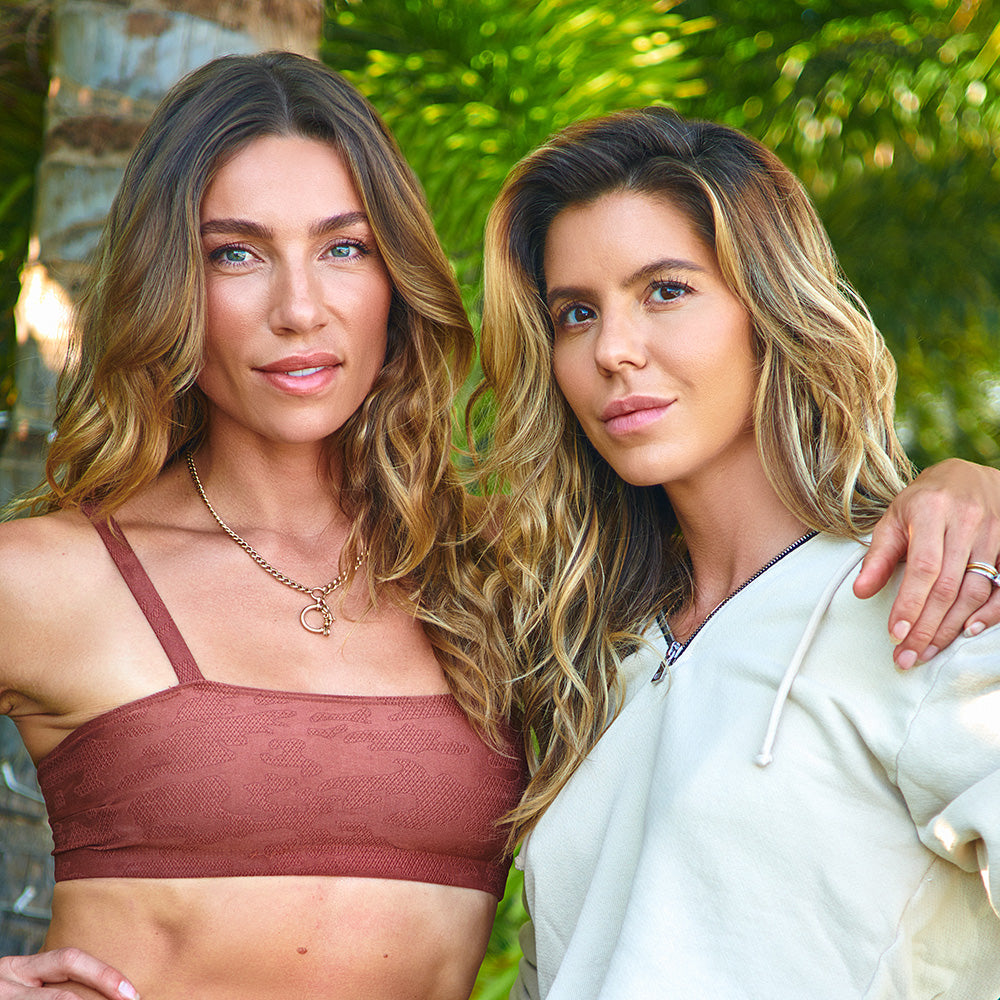
There's a particular kind of clarity that comes with pregnancy: a sudden, urgent relationship with your own body that most women describe as unlike anything before it. For Hope Dworaczyk Smith and Lauren Berlingeri, that clarity became a business. Hope spent two years perfecting a body butter she first mixed in her kitchen because nothing on the market was good enough for her skin during pregnancy; what started as a personal experiment became MUTHA, a luxury skincare brand worn by women around the world. Lauren co-founded HigherDOSE to bring infrared technology and a distinctly female perspective to a wellness space long dominated by men, and has since brought that same ethos to one of life's greatest biohacks: motherhood.
Both women built brands rooted in the most intimate kind of knowing: what it feels like to live in a body that is changing, demanding, and worth taking seriously. Nobody tells you that starting a company and having a baby require roughly the same things — relentless patience, a high tolerance for uncertainty, the ability to function on very little sleep — but Hope and Lauren will. We sat down with them to talk about what it really looks like to run a company, raise children, and refuse to treat either as secondary.
Origin + Identity
Your brand has a deeply personal origin story. How much of that story do you still feel connected to as the company has grown or does running a business eventually require some distance from the original emotional spark?
Lauren Berlingeri: I feel even more connected to it now, just in a different way. In the beginning, it was very personal. I was solving for myself and how I wanted to feel in my body. Now it’s expanded into solving for so many women, but the intention is the same. If anything, the stakes feel higher. It’s not just about me anymore. It’s become creating something that actually works, that women trust, that becomes part of their lives. I’ve never felt disconnected from the original WHY; it’s just matured.
Hope Dworaczyk Smith: I don't think I've ever stepped away from it, it's more that it's evolved with me. In the beginning, it was tied to a very specific moment. Now it's more of a standard I hold everything to.. less emotional day-to-day, but built into how I make decisions. That original perspective is what keeps things clear. If something doesn't align with it, it's usually a no-go.
At what point did you stop thinking of yourself primarily as a founder and start thinking of yourself as a mother who also runs a company or has that shift never fully happened?
LB: I don’t think it’s a clean shift. It’s more like a constant recalibration. There are moments where I’m fully in founder mode, and moments where nothing matters except being a mom. And then there are a lot of moments where the two are completely intertwined. If anything, becoming a mother made me a better founder. It stripped away anything that wasn’t essential.
HDS: Motherhood reset the hierarchy for me pretty quickly. Before kids, work could take up as much space as I gave it. After, there were natural limits, certain things I won't miss, certain times that are protected. I still run the company in a very hands-on way, but it's not what ultimately defines me at the end of the day.

Motherhood + the Business
What does a typical week actually look like for you — not the aspirational version, the real one?
LB: It’s full, and it’s not perfectly balanced. Mornings are with my kids to get them ready for the day and do school drop-off. Then I go straight into work mode: team calls, and product or creative decisions. I’m very involved in the brand, so there’s a lot of switching between big-picture thinking and very detailed execution. Afternoons are a mix of sometimes more work, sometimes carving out time to be with my kids. Evenings are family. And then there are the in-between moments of answering messages on the fly, thinking, adjusting. It’s a constant flow, not a clean schedule.
HDS: Most days start with school drop-off. That's non-negotiable for me. Then it's straight into calls, product development, creative, and putting out fires. I stack my schedule tightly so I can protect the back end of the day for pick-up and being present at home. Some days are more work-heavy, some more home-focused. It’s an evolving, always shifting balance.
How did you think about family planning in the context of building a company? Is that even a conversation that gets had openly enough?
LB: Not really, at least not in an open or supported way. I think a lot of women feel like they have to choose, or at least sequence it perfectly. And the truth is, there is no perfect timing. For me, it was more about deciding I wasn’t going to wait for things to be perfectly aligned because they never are. You just have to build both at the same time and figure it out as you go.
HDS: It's rarely as planned as people make it sound. I got pregnant, everything shifted, and the brand actually came out of that. From there, I knew I wanted to have more children but I was dealing with an autoimmune disease and my plan again shifted. I ultimately used a surrogate to have my girls. So even within my own story, it wasn't linear. There's no perfect timing. You adapt and figure it out.
Has becoming a mother changed what you want your company to be — its values, its priorities, what success looks like?
LB: Completely. It’s made me think long-term in a different way. Not just growth, but impact. What are we actually putting into the world? What are we encouraging? It’s also made me more protective of my energy and where I focus. The company has to be aligned and it has to mean something.
HDS: Completely, and it started shifting before MUTHA even existed. Before becoming a mother, my work was more about building, achieving, and proving something. Then I got pregnant and everything changed: my standards, what I cared about, what I was willing to put out into the world. Now success looks a lot more personal. The ambition is still there, but it's rooted in something much more real.

Self-Care as a CEO
What are your non-negotiables when you only have 20 minutes between school drop-off and the first meeting of the day? And when you have real time whether it’s a weekend or a vacation, what does genuine restoration look like for you?
LB: If I have 20 minutes, I’m doing something that shifts my state quickly — infrared, a quick sweat, breathwork, even just getting outside. I’m not looking for perfection here, I want a reset. When I actually have time, restoration is slowing down, being present, spending time with my family, being in nature, and just not rushing. That’s what actually fills me back up.
HDS: If I have 20 minutes, I just want to do what I can to feel like myself. Eye masks are a must. A little No. 1 Serum, something on my lips.. usually our new Pucker Up Lip Plump launching in May (!). Celery juice also seems to always find its way in there, too..
When I actually have time, I drop all of that urgency. Slower mornings, no rushing, just being with my kids.

Burnout + Staying "On"
Founders are expected to be always on: always pitching, always optimistic, always the energy in the room. How do you protect yourself from that performance becoming exhausting?
LB: I’ve gotten a lot better at not performing. Early on, you feel like you always have to be “on” — for your team, for partners, for everyone. But that’s not sustainable. Now I’m much more honest about where I’m at. I don’t force energy that isn’t real and I’ve built a team where I know I don’t have to carry everything.
HDS: I don't think you can do this well if you're "on" all the time, I know I can't. I've become very intentional about where my energy goes. Not every room needs the same version of me. What protects me is time with family, close friends, and time alone.. spaces where I'm not "the founder" at all.
What are your early warning signs that you're burning out, and what do you actually do about it?
LB: For me it’s when everything starts to feel reactive instead of intentional. When I’m rushing, not present, not thinking clearly. When that happens, I know I have to pull back. Even if it’s just creating space for a few hours to step away, get into my body, and reset. I’ve learned that pushing through burnout doesn’t work. You just extend it.
HDS: I can usually tell by how disconnected I feel from my own judgment. I'll second-guess things I'd normally be decisive about, or start looking outside myself for answers instead of trusting what I know. When that happens, I try to pause and allow myself uninterrupted time to reset. I need space to think, not more input.

Modeling + Legacy
What's one thing about being a female founder that you're consciously trying to model for your kids?
LB: That you can build something you believe in and still be present in your life. I want them to see that work can be creative, meaningful, and aligned, and not something that drains you.
HDS: I want them to see that you don't have to choose. You can be ambitious and present at the same time. And as a woman, you don't have to apologize for leading or having a point of view. If they learn anything from me, it's that you don't have to make yourself smaller to make everything else work.
What do you hope your children understand about why you built what you built?
LB: That it came from wanting to feel good, and wanting other people to feel good too. Not just physically, but in how they live and how they take care of themselves. That Mommy did something that was my true passion, and that's inspiring for them to find the same for themselves.
HDS: I built this because of them. Becoming their mother changed my standards, what I trusted, what I knew should exist but didn't. I hope they understand it came from love, but also from conviction. If you have that driving force behind what you want for yourself, you can build it yourself.

For Lauren
HigherDOSE grew significantly during the pandemic with at-home sauna systems and people suddenly very invested in personal wellness. What was it like to be scaling a company through that period as a mother of twins?
LB: It was less about scaling and more about the acceleration of a decision we had already made. We had already started pivoting the business from spa locations to at-home wellness tech, and COVID just forced everything to happen faster. There was no gradual transition, it was immediate. At the same time, my twins were six months old. I had no full-time help. There was no separation between being a mom and running the company. I was doing both, all the time. And honestly, the drive came from survival. It wasn’t this calm, strategic moment; it was “we have to figure this out.” That kind of pressure sharpens you, but it also puts your nervous system into a state that’s not sustainable. It took me a few years to actually unwind from that. To come back into a way of building that isn’t just reactive or urgent, but intentional. But in that moment, it was pure instinct, and it’s a big part of why we are where we are today.
You came from extreme sports hosting, modeling, fitness — lots of high-performance environments. How has your relationship to your own body and performance changed since having kids?
LB: It’s a completely different relationship. Before, it was more performance-focused and how things looked. Now it’s about how I feel, how my body functions, and how I support it. I have a lot more respect for my body now. My focus is less about pushing my body and more about working with it.

For Hope
MUTHA started because you couldn't find a product you trusted while pregnant. There's something almost poetic about a company born from an unmet need during one of the most vulnerable moments in a woman's life. Does that origin still inform how you develop products?
HDS: That moment really set the bar for us. When I was pregnant, I investigated everything. Every ingredient, every claim. I realized the importance of placing your trust in a product and the responsibility that a brand has to their consumer. That mindset never went away. Every product we make has to feel right, be effective, and earn its place. Starting from that place of vulnerability keeps me honest about what we put out into the world. If I question it, even for a second, it doesn't launch. You have to be a perfectionist in that way so that you’re a reliable, trusted destination.
You're a certified doula, a licensed esthetician, and you wrote Your Body Is Magic — you've really built an entire philosophy around the pregnant and postpartum body. Where does the business end and the personal mission begin for you?
HDS: The business was born directly from something personal. I wasn't trying to start a brand, I was trying to solve a problem I was having in my own body during a time when you're paying attention to everything. Being an esthetician gave me a foundation, but pregnancy and postpartum made it more specific and more real. The business is just an extension of that and the personal mission continues to grow alongside MUTHA.
You have four children and you're also deeply involved in philanthropy — Together We Rise, Unlikely Heroes, International Medical Corps. How do you hold space for all of that?
HDS: I don't think of it as separate buckets. It's more about alignment than balance. My family is the center, and philanthropy is something I want my kids to grow up seeing as normal. Those parts of my life overlap. Practically, I'm selective. I focus on the organizations that really mean something to me and say no to the rest. It works because it's intentional.
Closing Reflection
If you could go back and tell yourself one thing, either about motherhood or about building a company, what would it be?
LB: That you don’t need to have everything figured out before you start. Whether it’s motherhood or building a company, you learn by being in it. You grow into it. And to trust yourself more. You usually know what’s right before you look for confirmation.
HDS: In the moment, whether it's motherhood or building a company, every decision feels enormous. And some are, but most aren't. There's more time than you think. I would've told myself to trust my instincts sooner. You usually know what's right, just don’t second-guess yourself.
A Supermom's Favorites

Microcurrent Body Sculptor Ritual Set

Infrared Sauna Blanket

Red Light Face Mask
Lauren Berlingeri is dedicated to inspiring others through fitness and naturally-healthy lifestyle practices. After launching her career as an international model, Berlingeri went on to star in her own show, “Women vs. Workout”—grossing over 15 million views and receiving a Webby Award nomination for Best Host. This experience led to extreme sports hosting for brands such as UFC, EA Sports, and IMG. Having cemented her name within the fitness industry, Berlingeri decided to expand her expertise, earning a holistic nutritionist and health coach certification at The Institute of Integrative Nutrition. Her venture into the health and wellness startup spectrum began in 2014 as one of the first creative minds at Aloha.com—doing product development, leading the brand ambas-sador program, and brand partnerships. Lauren discovered the power of Infrared technology — specifically Infrared saunas — and saw an opportunity to bring the biohacking tool to the masses. Since co-founding HigherDOSE with Katie Kaps, the wellness brand has experienced meteoric success, boiling down to a true revolution of the spa business. Creating all the initial Forbes, branding themselves and even acting as models in their first campaigns, the brand exploded, leading the way to at-home sauna systems that thrived during the pandemic. As a female biohacker and mother of twins, Lauren brings a fresh perspective to a space that has been dominated by male voices from its inception, making it HigherDOSE’s core mission to educate women about their bio-individuality and give them the tools they need to reach their own best selves, with content designed to educate people on how to take control of their own wellness regimens.